PALM SUNDAY CELEBRATION AT ST. THERESA’S FUNTUA.
3/29/2026
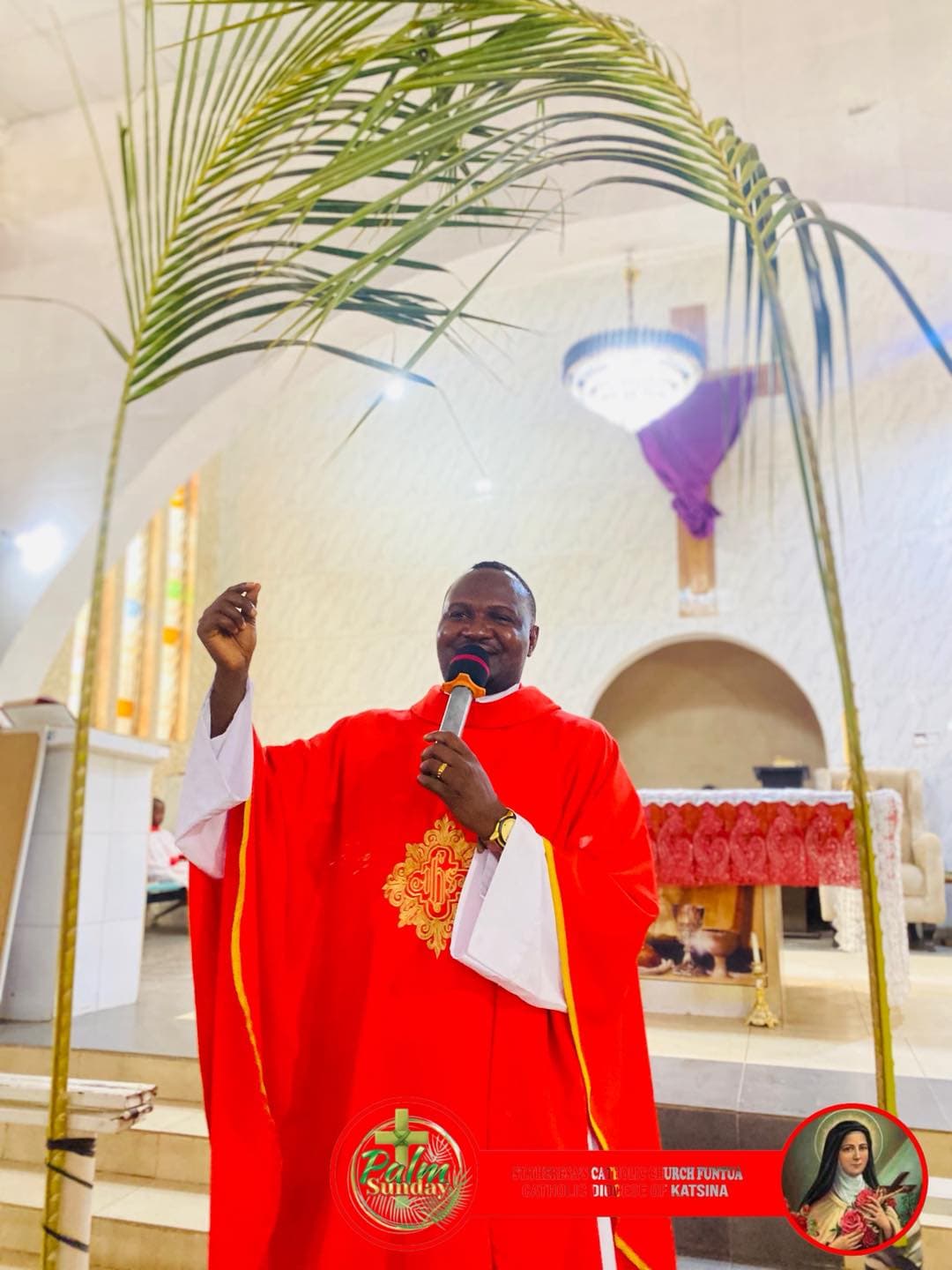
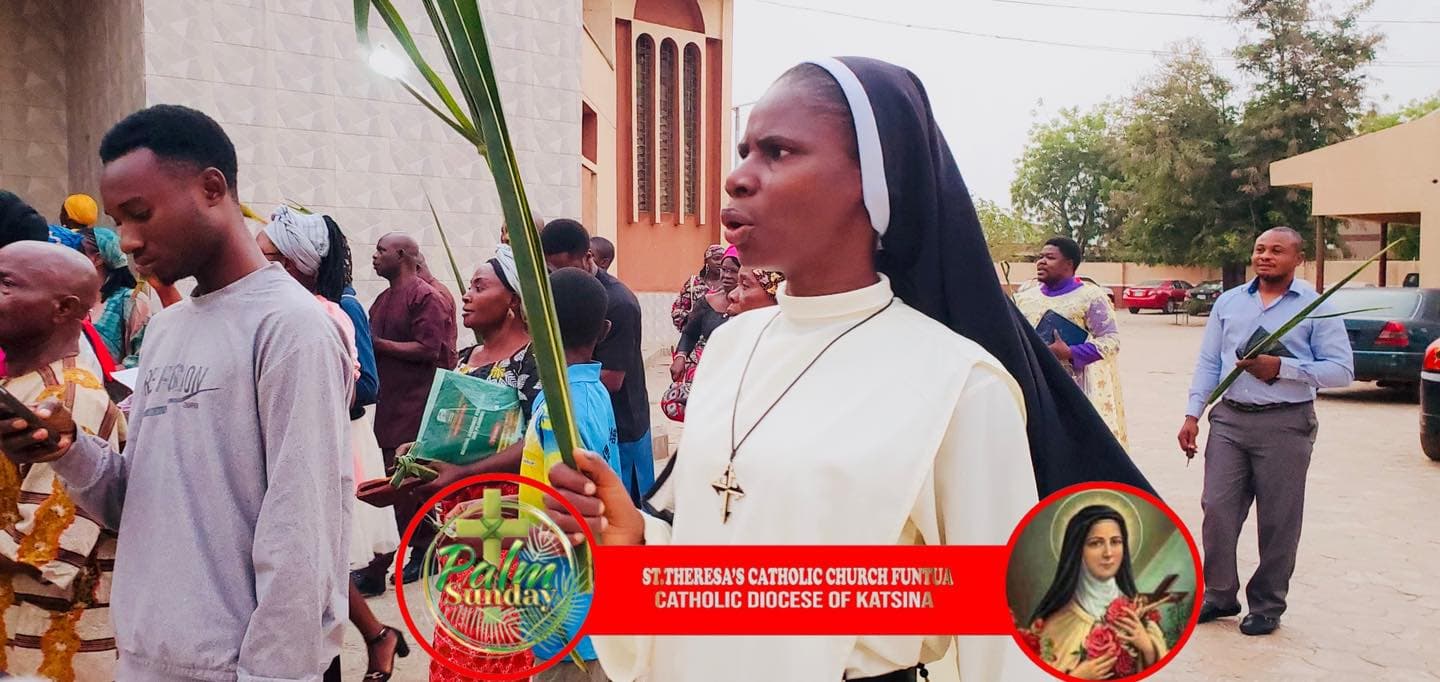
The celebration of Palm Sunday at St. Theresa’s Catholic Church, Funtua, commenced with a solemn and joyful procession, commemorating the triumphant entry of Jesus Christ into Jerusalem. The procession was led by Rev. Fr. Musa Abubakar, as the faithful waved their palm branches and sang “Hosanna in the Highest,” proclaiming Christ as King.
The Liturgy of the Word followed, beginning with the first reading from the Book of Isaiah (50:4–7). The Responsorial Psalm was taken from Psalm 22, “My God, my God, why have you forsaken me?” The second reading from the Letter to the Philippians (2:6–11). The Gospel reading, taken from Matthew (26:14–27:66), presented the Passion narrative of our Lord Jesus Christ.
In his homily titled “Faithful Discipleship in the Midst of Persecution,” Rev. Fr. Musa Abubakar delivered a profound reflection on the call to remain steadfast in faith despite trials.
He began by drawing attention to the first reading, emphasizing how the prophet Isaiah foreshadowed the suffering, rejection, and ultimate sacrifice of Christ. He highlighted the courage of the “Suffering Servant,” who, despite persecution, remained obedient to God, declaring, “I know I shall not be put to shame” (Isaiah 50:7). This, he explained, is a model of unwavering trust for all Christians.
Reflecting on the second reading, he spoke about the self-emptying of Jesus Christ, noting that although Christ was equal with God, He chose humility, taking the form of a servant and becoming obedient even unto death on the cross. This act of humility, he stressed, is a call for Christians to let go of pride, ego, and worldly attachments in order to truly follow Christ.
Turning to the Passion narrative, Rev. Fr. Musa pointed out the painful irony of human inconsistency: the same crowd that welcomed Jesus with praises on Palm Sunday later cried out “Crucify Him.” He used this to challenge the faithful to examine their own lives—questioning whether they remain loyal to Christ only in moments of joy and convenience, but abandon Him in times of difficulty.
He further highlighted key themes from the Passion: betrayal, denial, suffering, and persecution. From Judas’ betrayal to Peter’s denial, he explained that these human weaknesses are still present today. However, he encouraged the faithful not to lose hope, but to seek repentance and return to God whenever they fall.
Rev. Fr. Musa also reflected on the symbolic choice of Jesus riding into Jerusalem on a donkey rather than a horse. He explained that this gesture signified peace, humility, and servanthood, contrasting earthly kingship marked by power and dominance. Christ’s kingship, he noted, is one of love, sacrifice, and humility.
He concluded by urging the faithful to remain true disciples of Christ, especially in moments of trials, persecution, and personal struggles. Just like the Suffering Servant, Christians are called to stand firm in faith, trusting in God’s saving power and never being ashamed of their identity in Christ.
The celebration continued with the Profession of Faith, the Prayers of the Faithful, the Offertory, and the presentation of bread and wine. This was followed by the consecration of the Holy Eucharist and the exchange of the sign of peace.
The faithful received Holy Communion, after which parish announcements were made.
The celebration ended with the final blessing at 8:40.
Photo Highlights