FUNTUA DEANERY CATHEDRATICUM HELD AT ST MARY’S GIDAN KORAU PARISH.
3/5/2026
The maiden Cathedraticum of Funtua Deanery was solemnly celebrated at St Mary’s Gidan Korau Parish New Basilica on 5th March, 2026.
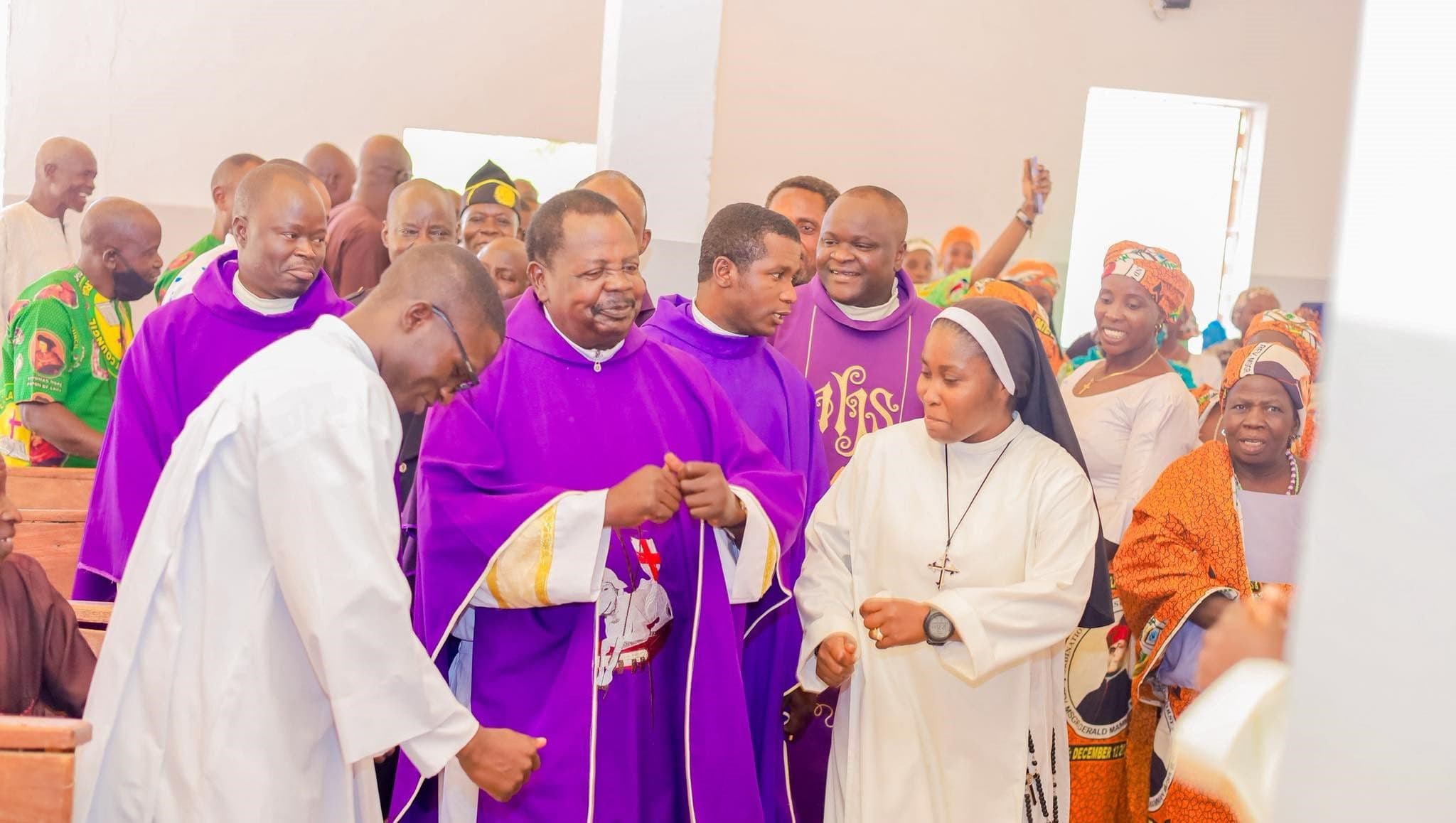
The liturgical celebration began at 9:00am with a solemn procession led by His Lordship, Most Rev. Dr. Gerald Mamman Musa, Bishop of the Catholic Diocese of Katsina. He was flanked by the Dean of Funtua Deanery, Very Rev. Fr. Richard Shuaibu, alongside Very Rev. Fr. Francis Lemark and other priests of the deanery including Rev. Fr. Habila Samaila, Rev. Fr. Lazarus Amen, Rev. Fr. Nura Emmanuel, Rev. Fr. Musa Abubakar, Rev Fr Musa Bulus , Rev. Fr. Kelvin Bello, and Rev. Fr. Victor Chibuzor who served as the Master of Ceremonies. Also present in the procession were the Knights, catechists, lay readers and altar servers who added solemnity to the celebration.
At the beginning of the Mass, the Dean of Funtua Deanery, Very Rev. Fr. Richard Shuaibu warmly welcomed the Bishop to the maiden Cathedraticum of the deanery. He also welcomed the priests, religious and lay faithful who gathered from various parishes within the deanery to witness and participate in the important diocesan celebration.
The Liturgy of the Word followed with the First Reading taken from the Book of Jeremiah 17:5–10, while the Responsorial Psalm was taken from Psalm 1 with the response: “Blessed the man who has placed his trust in the Lord.” The Gospel was proclaimed by Rev. Fr. Nura Emmanuel from the Gospel according to Luke 16:19–31, which narrates the parable of the rich man and Lazarus.
In his homily, the Bishop, Most Rev. Dr. Gerald Mamman Musa, began by thanking God for the successful celebration of the maiden Cathedraticum of Funtua Deanery. Reflecting deeply on the Gospel reading, he centered his message on the story of Lazarus and the rich man, drawing the attention of the faithful to what he described as one of the greatest sins in the world today — the sin of indifference.
He explained that the rich man in the parable was not condemned simply because he was wealthy, but because he ignored the suffering of Lazarus who lay at his gate. According to the Bishop, the real sin of the rich man was the sin of omission and negligence, the failure to show compassion and care to someone in need right before him.
The Bishop further explained the meaning of the name Lazarus, which comes from Eleazar, meaning “The Lord is my help.” This message resonated with the faithful as the choir of Zumunta Mata rendered the Hausa hymn “Daga ina taimako na zai zo” meaning “From where will my help come?”
He emphasized that the message of the Gospel calls Christians to examine their hearts and their daily relationships with others. He noted that indifference can be seen in many aspects of life — in families, in communities, and even within the Church. Sometimes husbands and wives fail to show kindness to each other, leaders neglect those entrusted to them, and people turn away from the needs of the poor around them.
Drawing attention to the Lenten season, the Bishop reminded the faithful that Lent is a time of reflection, conversion and charity. He encouraged Christians not to neglect the poor, the sick, the hungry and those in distress. He highlighted the Corporal Works of Mercy, calling on the faithful to practice them actively: feeding the hungry, giving drink to the thirsty, clothing the naked, visiting the sick and prisoners, and helping those in need.
To illustrate this call to charity, the Bishop shared an experience of the Diocese’s recent visit to a prison facility where they encountered over 900 inmates. During the visit, the diocese discovered that some inmates were unjustly detained, and through the intervention and support of the Church, about ten inmates were eventually released. He noted that such acts demonstrate how the Church must continue to stand as a voice of hope and justice for the marginalized.
Speaking about the significance of the Cathedraticum, the Bishop explained that the annual offering is an important contribution from the faithful to support the mission of the Church. He said these contributions help the Church to continue its pastoral and social responsibilities, including the building of schools, hospitals, and other developmental projects that benefit society.
He further mentioned that through the support of the faithful, the diocese hopes to rebuild and strengthen schools, especially those in rural areas, while also ensuring that teachers receive better and more dignified salaries. The Bishop also spoke about an educational support center established in Malumfashi to help students prepare for the Joint Admissions and Matriculation Board (JAMB) examinations.
Addressing parents, he encouraged them to guide their children wisely in choosing meaningful and productive career paths that will help secure a brighter future for both the children and society.
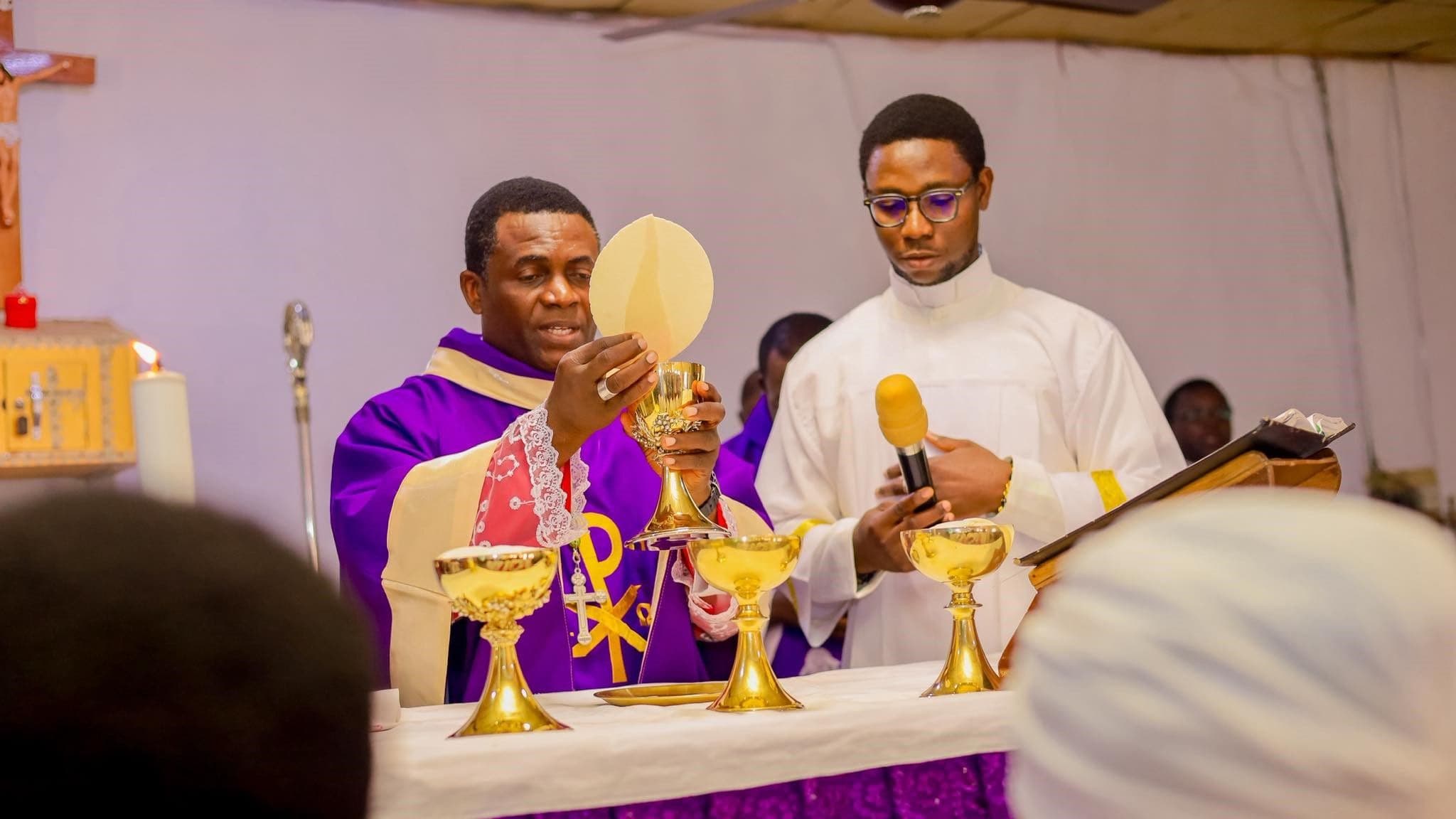
Following the homily, the Mass continued with the offertory procession and the consecration of the Holy Eucharist. The faithful exchanged the sign of peace and received Holy Communion in a spirit of reverence and gratitude.
The thanksgiving procession followed, during which parishes, societies, organizations, schools and hospitals came forward parish by parish to offer their thanksgiving to God and support for the mission of the Church.
At the end of the celebration, Sir Ishaku Rabo delivered a vote of thanks on behalf of Funtua Deanery, expressing appreciation to the Bishop, priests, religious and all the faithful who made the event successful. He also prayed for God’s protection as everyone journeyed back safely to their various destinations.
In his concluding remarks, Bishop Gerald Mamman Musa expressed his gratitude to everyone who contributed to the success of the celebration, particularly those who traveled from Kaura Namoda and the people of Tafoki Parish. He thanked the parishes for their sacrifices, generosity and gifts offered during the Cathedraticum.
The celebration concluded with group photographs and the final blessing imparted by the Bishop at 1:00pm, bringing the historic maiden Cathedraticum of Funtua Deanery to a joyful and memorable close.
Photo Highlights